



Business English Tip of the Week
 Every week we publish a business English tip concerning different aspects of business English. Topic areas include writing, speaking, listening, grammar, vocabulary, pronunciation, exams as well as general English. Many tips include audio clips. To receive 'Business English Tip of the Week' by email, just subscribe to the newsletter from the link above.
Telephoning Bad News - Making Difficult Requests |
|
When making requests, it's necessary to be polite. In most situations, the standard request phrases "Would you...?" or "Could you .....?" are acceptable. For example: However, in certain situations, where the request will trouble or inconvenience someone, it is a good idea to use a stronger, more polite request phrase. The most common phrase is "I'd appreciate if you/we could...." Here are some examples: If the request is very difficult, use the phrase "I'd really appreciate if it you/we could..." Listen to these examples: Note: we don't say "I'd very appreciate it if you could." Use "really" instead of "very." The other common phrase for making difficult requests is "I would be grateful if you could..." This phrase is used in the same way as "I'd appreciate it if you could..." Listen to these examples: And if the request is very troublesome for someone, use the phrase "I'd be really/very grateful if you could...." This phrase is used in the same way as "I'd really appreciate if you could..." as in these examples:
Why do we have to be so polite? This is probably a cultural thing. In Western culture, people expect politeness. If your request sounds more like a command, then you're likely to cause offence, and there's a good chance they'll say "no." If you make a request and indicate your appreciation, your request is much more likely to be granted. Of course, much depends on the context of the conversation you have and the relationship you have with the person you're speaking to. |
||||||
Email Etiquette
Improve your Listening Comprehension
Comparison of Adjectives
Difference between British and American English
Avoid using too many negatives
Business Presentation Tips
Developing your Vocabulary
Improving your Listening
Becoming a Better Language Learner
Reading Tips
Job Interview Tips Part 2
Job Interview Tips Part 1
Methodology for Learning New Vocabulary
Use of Pronouns to Avoid Sexist Writing
Three Common Punctuation Problems
How to give a speech in English
A Little vs Little & A Few vs Few
Telephone Answering Tips
General Grammar and Writing Tips
Subscribe to Workplace English Training E-Platform
Improve your business English through the world’s best and most comprehensive online platform
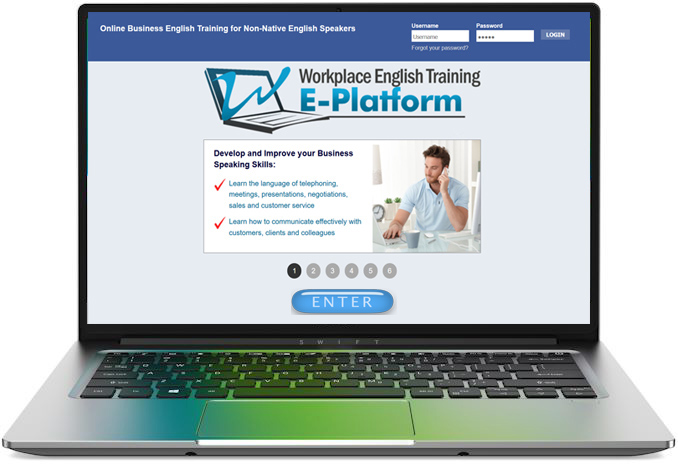
INCLUDES:
 Business English level test
2000+ online lessons/interactive exercises
My Learning Path module (members build their own courses from our content).
My Courses module (members can select from a number of course options).
Database of sample business documents
Library of 2600+ downloadable offline training resources
Podcast lessons, tips, ebook training guides, fun stuff
Student Helpline
Key Benefits
- Focus only on the English you need for work.
- Learn at your own pace in your own time.

Business English Tip of the Week
Latest Newsletters
- Business Word/Phrase of the Day - WORK OVERTIME
- Business English Tip of the Week - Using Prepositions of Place
- English Bites! - Verb + Preposition Combinations
- Workplace English Podcasts - BEP42: Clarifying and Confirming Instructions
- In-Depth Tips from Dr English - Tips for Networking when Business Socialising
Business English Tip Categories
- Monthly Quiz Archive (17)
- Business Speaking (54)
- Business Reading (2)
- Business Grammar (22)
- Business Vocabulary (13)
- General English (8)
- Business Writing (20)